Ten All-on-6 myths, checked against the evidence
All-on-6 attracts a lot of confident claims, from adverts and from worried friends. Here are ten we hear often, and what the evidence actually says.
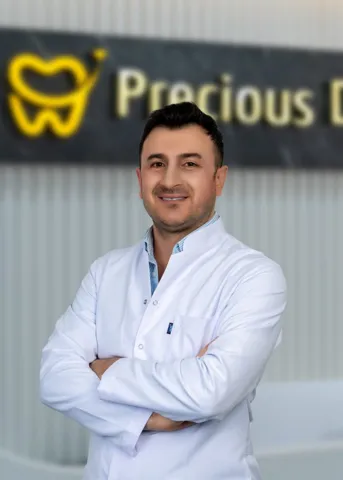 Medically reviewed by Dt. Hüseyin Yavuz Özbek, implant surgeon · Updated October 2026
The most common myths are that All-on-6 lasts forever, needs no maintenance, is always better than All-on-4, gives final teeth in a day, and is unsuitable for older people. The evidence says implants may last 10 to 20 years before retreatment with care, maintenance is essential, four and six implants show similar survival overall, same-day teeth are temporary, and age alone does not rule it out.
Myth 1: “All-on-6 lasts forever”
The evidence: implants can last a very long time, but not necessarily for ever. The British Society of Periodontology says that, with care and maintenance, implants may be expected to last 10 to 20 years before retreatment, and that the crowns, bridges or dentures on top may need replacing more often. Long-term studies of implants generally show high survival over ten years, with some variation by age and health. A clinic's written guarantee is a separate promise about repairs, not a promise that nothing will ever need replacing. Read more on how long All-on-6 lasts.
Myth 2: “Once it's in, I won't need a dentist”
The evidence: implants need more maintenance attention, not less. The British Society of Periodontology says implants require regular monitoring, a diligent self-care routine and professional maintenance. Peri-implant disease is common: a 2022 meta-analysis estimated peri-implantitis at about 20% of patients. Regular check-ups catch problems early. See maintenance visits.
Myth 3: “Implant teeth can't get disease”
The evidence: they cannot decay, because titanium and zirconia do not rot. But the gum and bone around implants can become inflamed if plaque builds up, a condition the Oral Health Foundation calls peri-implantitis. Cleaning under the bridge every day matters. See peri-implantitis explained.
Myth 4: “Six implants are always better than four”
The evidence: not as a rule. A 2024 meta-analysis of upper-jaw bridges on four or six implants found no significant difference in implant or bridge survival, though there was less bone loss around implants with six. Six spreads the load and leaves more support if one fails; four can avoid grafting where bone at the back is limited. The right number depends on your bone. See why six implants and our sister guide allon4vsallon6.co.uk.
Myth 5: “Teeth in a day means finished teeth in a day”
The evidence: “same-day teeth” are temporary. The Oral Health Foundation says implants usually take around four months to heal, and that in some cases a replacement tooth can be placed on the same day. With All-on-6, a fixed temporary bridge is often fitted within a day or two; the final bridge follows months later. See same-day teeth.
Myth 6: “I'm too old for implants”
The evidence: age alone does not rule out implants. A 2018 systematic review found implant survival of about 97% at one year and 96% at five years in people aged 75 and over. Health, medicines, bone and the ability to clean matter more than age. See All-on-6 over 70.
Myth 7: “If I've lost bone, I can't have implants”
The evidence: bone loss changes the plan but often does not rule implants out. Tilted implants, bone grafts, sinus lifts and, in the upper jaw, zygomatic implants are all used to work around limited bone. A 3D scan shows what is possible. See the upper jaw and the sinus and zygomatic implants.
Myth 8: “All-on-6 is the same as Turkey teeth”
The evidence: they are different treatments. The phrase “Turkey teeth” is usually used about crowns or veneers placed on natural teeth that have been heavily filed down, sometimes on healthy teeth. All-on-6 replaces teeth that are already missing or failing with a bridge on implants. Both should be planned carefully, and both have risks, but they are not the same thing. Our sister guide allon6turkey.co.uk looks at treatment in Turkey in more detail.
Myth 9: “It's very painful”
The evidence: the British Society of Periodontology says implants are usually placed under local anaesthetic, that sedation may be available for anxious patients, and that, after numbing, the procedure is painless, though you may feel pressure and vibration. It compares the procedure to a tooth extraction, with initial healing within a few days and over-the-counter pain relief usually enough. With All-on-6 there are several sites, so expect more swelling than for one implant. See recovery.
Myth 10: “Fixed teeth are always better than dentures”
The evidence: fixed bridges have clear advantages, such as stability and an uncovered palate, but they are not right for everyone. Implant-retained dentures, which are removable, also improve quality of life compared with conventional dentures and can be easier to clean for people with limited dexterity. A conventional denture may suit people who cannot or do not want to have surgery. See All-on-6 and the alternatives and when cleaning is harder.
A few more half-truths
| What you might hear | The fuller picture |
|---|---|
| “Zirconia never breaks” | Very strong, but layered porcelain on zirconia can chip. See broken or loose bridge. |
| “Smoking only matters for a few weeks” | Smoking raises implant failure risk long term. See smoking and vaping. |
| “You can't have an MRI with implants” | Usually you can; tell the radiographer. See scans and surgery. |
| “The bridge comes out at night” | No. It is fixed; only a dentist removes it. |
| “Diabetes rules it out” | Not usually; control matters. See diabetes. |
How to judge a claim
- Ask where a number comes from, and what it measured: implant survival, bridge survival or patient satisfaction.
- Be wary of “never”, “always”, “permanent” and “guaranteed for life” without written terms.
- Check UK sources: the NHS, the Oral Health Foundation and the British Society of Periodontology.
- Ask a dentist to explain how a general claim applies to your own mouth.
Our editorial policy explains how we choose and check the evidence on this site.
Myths from the other direction
Not all myths are over-optimistic. Some put people off treatment that could help them:
- “Implants are rejected like transplants.” Implants are not living tissue and are not rejected in that sense. When an implant fails, it is usually because it did not bond with the bone or because of infection or overload, not because of rejection.
- “Once you've had dentures for years, it's too late.” Bone shrinks, but there are often ways to work with what remains, including tilted implants and grafting.
- “If one implant fails, the whole thing fails.” With six implants, a single failure can often be managed without losing the bridge. See why six implants.
- “The surgery takes months of recovery.” Initial healing usually takes days, with a soft diet for some weeks. The bone takes months to bond, but that happens in the background while you live normally.
Where myths come from
Many myths start with a real fact stretched too far. “Implants last a lifetime” starts from impressive long-term survival figures. “Six is better than four” starts from the reasonable idea that more support is better. “Same-day teeth” starts from the real possibility of fixed temporary teeth on surgery day. Advertising often simplifies these into slogans, and worried friends sometimes simplify horror stories in the other direction. The more useful question is always: what exactly was measured, in whom, and over how long?
Ask for it in writing
If a clinic makes a claim that matters to your decision, such as how long the bridge will last, what the guarantee covers, or whether same-day teeth are included, ask for it in writing. A written treatment plan and written guarantee terms protect you far more than any verbal promise.
At Precious Dental we would rather tell you the limits of All-on-6 than oversell it. Why we think we're the right clinic for All-on-6.
Common questions
Do All-on-6 implants last a lifetime?
They can last many years, but they are not guaranteed to last for ever. The British Society of Periodontology says implants may be expected to last 10 to 20 years before retreatment, with care and maintenance.
Is All-on-6 the same as Turkey teeth?
No. “Turkey teeth” usually refers to crowns or veneers placed on filed-down natural teeth. All-on-6 replaces teeth that are missing or failing with a bridge on implants.
Can All-on-6 get cavities?
The implants and bridge cannot decay. But the gum and bone around implants can become inflamed if plaque builds up.
Does All-on-6 mean no more dentist visits?
No. Regular check-ups and professional maintenance are essential for implants to last.
Is All-on-6 painful?
Surgery is done under local anaesthetic, with sedation if needed. Soreness and swelling for a few days are normal and are usually controlled with ordinary painkillers.
Sources
- British Society of Periodontology — Patient FAQs: dental implants (how long implants last, maintenance)
- Sharaf et al. (2024), Heliyon — Four versus six implants in the upper jaw: systematic review and meta-analysis
- Oral Health Foundation — Dental implants (healing around four months; same-day teeth in some cases)
- Schimmel et al. (2018), Clin Oral Implants Res — Implant survival in patients aged 75 and over
- Diaz et al. (2022), BMC Oral Health — Prevalence of peri-implantitis: systematic review
Checked October 2026. Where we give our own view as a clinic, we say so.
Ask a dentist-led team, without the sales pitch.
Tell us what you're considering. A real person replies in plain English, and will tell you honestly if All-on-6 isn't the right step for you.