Peri-implantitis: the gum disease of implants
Implant teeth cannot decay, but the gum and bone around implants can become inflamed. Catching it early makes a big difference, so it is worth knowing the signs.
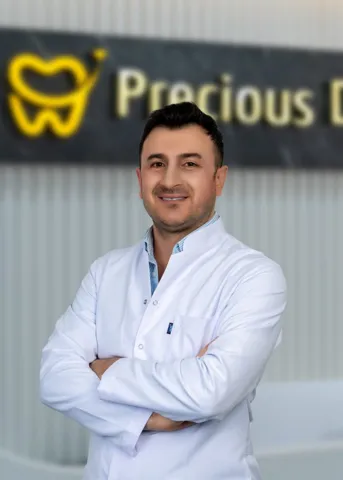 Medically reviewed by Dt. Hüseyin Yavuz Özbek, implant surgeon · Updated October 2026
Peri-implant disease comes in two stages. Peri-implant mucositis is inflamed gum around an implant without bone loss, and is reversible. Peri-implantitis is inflammation with bone loss around the implant, harder to treat and a cause of implant loss. A 2022 meta-analysis estimated peri-implantitis in about 20% of patients and 12.5% of implants, with wide variation by definition. Main risk factors are a history of gum disease, smoking and diabetes. Daily cleaning and regular professional maintenance are the best prevention.
What it is
Around every implant there is a seal of gum, and beneath that, the bone that holds the implant. Plaque, the sticky film of bacteria that forms on teeth, also forms on implants and bridges. If it is not cleaned away, the gum around the implant becomes inflamed. The British Society of Periodontology describes the two stages:
- Peri-implant mucositis: inflammation of the gum around an implant without any bone loss.
- Peri-implantitis: inflammation that has also caused loss of the bone supporting the implant.
It is the implant version of gum disease. The Oral Health Foundation puts it simply: if plaque builds up around the implant, it can cause peri-implantitis.
How common is it?
It is more common than many people realise. A 2022 systematic review and meta-analysis of 57 studies estimated peri-implantitis at about 19.5% of patients and 12.5% of implants. The authors stressed that figures vary widely depending on how the disease is defined and measured. A large 2025 review by the Academy of Osseointegration and American Academy of Periodontology, summarised by the British Society of Periodontology, reached the same broad message: peri-implant disease is common and lifelong maintenance is essential.
For All-on-6, with six implants under one bridge, the chance that at least one implant shows some inflammation at some point is real. That is not a reason to avoid implants. It is a reason to take maintenance seriously from day one.
Who is most at risk
The 2025 review identified the main risk indicators:
| Risk factor | Linked to | Read more |
|---|---|---|
| History of gum disease (periodontitis) | Mucositis and peri-implantitis | After gum disease |
| Smoking | Mucositis and peri-implantitis | Smoking and vaping |
| Diabetes | Peri-implantitis | Diabetes |
| Obesity | Mucositis; mixed evidence for peri-implantitis |
Age and sex showed no consistent influence. Other factors often discussed by dentists include a bridge shape that is hard to clean, retained cement under the gum (avoided with screw-retained bridges; see screw-retained bridges) and irregular maintenance visits.
Signs to look for
The British Society of Periodontology lists signs that could indicate infection or gum disease around an implant. Look out for:
- Bleeding around an implant when you clean, on more than one occasion.
- Red, swollen or tender gum around an implant.
- Pus or discharge, or a bad taste.
- Bad breath that cleaning does not fix. See bad breath with All-on-6.
- Gum shrinking back so that metal shows.
- Any looseness of the bridge, or pain when biting.
Pain is often absent until late. If you notice any of these, contact your dentist rather than waiting for your next routine visit.
How it is diagnosed
Your dentist or hygienist gently measures the depth of the space between the gum and the implant with a fine probe, checks for bleeding or pus, and compares X-rays over time to see whether the bone level around each implant has changed. With All-on-6, the bridge is sometimes removed to examine each implant properly. That is one reason early X-rays after the final bridge are useful: they give a baseline.
How it is treated
- Mucositis: improved home cleaning and professional cleaning around the implant usually reverse it.
- Early peri-implantitis: deep cleaning of the implant surface, sometimes with antiseptics or antibiotics, and closer monitoring.
- Advanced peri-implantitis: surgery to clean the implant surface, reshape the bone or, in some cases, regenerate bone. If an implant cannot be saved, it is removed.
The British Society of Periodontology notes that treatment of peri-implant disease can be challenging and often includes self-performed cleaning in addition to professional cleaning. Changing the bridge shape to make cleaning easier is sometimes part of the treatment.
Prevention: what works
- Clean under the bridge every dayBrush twice daily and clean around each implant with interdental brushes, super floss or a water flosser. The routine is on cleaning and care.
- Keep maintenance visitsAt intervals your dentist sets, more often if you are higher risk. See hygienist visits.
- Stop smokingThe single biggest change most smokers can make.
- Keep diabetes controlledGood control protects the gums as well as the rest of the body.
- Act on early signsBleeding is a warning, not something to put up with.
- Choose a cleanable designAsk before treatment how you will clean your bridge.
Peri-implantitis and your guarantee
Clinic guarantees usually depend on regular check-ups and good home care, because peri-implant disease is largely preventable. Keep records of your hygiene visits, especially if you are treated abroad and maintained at home. More on lifespan and guarantees in how long All-on-6 lasts.
Why implants can be more vulnerable than teeth
The gum around an implant attaches differently from the gum around a natural tooth. A natural tooth has fibres that run from the root into the gum and bone, forming a strong seal. Around an implant, the gum fibres mostly run parallel to the surface rather than into it, and the blood supply in that area is different. Many researchers think this makes the tissue around implants less able to contain infection once it starts, which may be one reason inflammation around implants can progress faster than gum disease around teeth. It is another reason to act on early signs rather than waiting.
Mucositis: the stage to catch
Peri-implant mucositis, inflamed gum without bone loss, is common and usually reversible. It shows up as redness, swelling and bleeding when you clean or when the hygienist checks. Treating it typically means improving home cleaning in the affected area and professional cleaning around the implant, then re-checking a few weeks later. If mucositis is caught and treated, it may never progress to peri-implantitis. That is the main value of regular maintenance visits.
What treatment involves for All-on-6
With a fixed bridge, the dentist often needs to remove it to treat an implant properly. A typical course for early peri-implantitis might be:
- Bridge removedTo give access to the affected implant and check the others.
- Deep cleaningThe implant surface and surrounding pocket are cleaned under local anaesthetic, using methods suitable for implant surfaces.
- Antiseptics or antibioticsSometimes used as part of treatment, at the dentist's discretion.
- Bridge reviewedThe underside may be reshaped to make cleaning easier, before it is refitted.
- Re-checkAfter a few weeks to see whether the inflammation has settled.
If inflammation continues or bone loss is significant, surgical treatment may be offered. Outcomes vary, and the British Society of Periodontology describes treatment of peri-implant disease as challenging, which is why prevention matters so much.
If an implant is lost
Losing one of six implants does not always mean losing the bridge. Depending on which implant is affected and how the bridge is designed, the bridge may continue on the remaining implants, or a new implant may be placed once the area has healed. This is one practical advantage of six implants over four. See why six implants.
Keeping a simple record
Note the date of each maintenance visit and anything the hygienist mentions, such as bleeding around a particular implant. Over time, this helps you and your dentist see patterns and catch changes early.
At Precious Dental ask us to show you how to clean your bridge before you go home. Our guarantee terms, including the check-ups they depend on, are on our guarantee page. Why Precious Dental.
Common questions
Is peri-implantitis painful?
Often not, especially early on. That is why regular check-ups matter. Bleeding, swelling, a bad taste or gum shrinking back are more common early signs than pain.
Can peri-implantitis be cured?
Mucositis, the early stage, can usually be reversed with better cleaning and professional care. Peri-implantitis can often be controlled, sometimes with surgery, but bone that has been lost may not fully return.
Will I lose my All-on-6 if one implant gets peri-implantitis?
Not necessarily. One implant can often be treated while the bridge stays in place, or the bridge can sometimes continue on the remaining implants. Early treatment gives the best chance.
How often should implants be checked?
Your dentist will set an interval based on your risk. People with a history of gum disease, smokers and people with diabetes are usually advised to have more frequent maintenance.
Does mouthwash prevent peri-implantitis?
Mouthwash can help as part of a routine but does not replace mechanical cleaning under the bridge and around each implant.
Sources
- Diaz et al. (2022), BMC Oral Health — What is the prevalence of peri-implantitis? Systematic review and meta-analysis
- British Society of Periodontology — Research Corner: prevalence and risk factors for peri-implant diseases (AO/AAP systematic review)
- British Society of Periodontology — Patient FAQs: dental implants (peri-implant mucositis and peri-implantitis)
- Oral Health Foundation — Dental implants (plaque around an implant can cause peri-implantitis)
Checked October 2026. Where we give our own view as a clinic, we say so.
Ask a dentist-led team, without the sales pitch.
Tell us what you're considering. A real person replies in plain English, and will tell you honestly if All-on-6 isn't the right step for you.