All-on-6 dental implants, explained plainly
A full set of fixed teeth on six implants. What the treatment involves, who it suits, what recovery is really like, and how to keep it working for years.
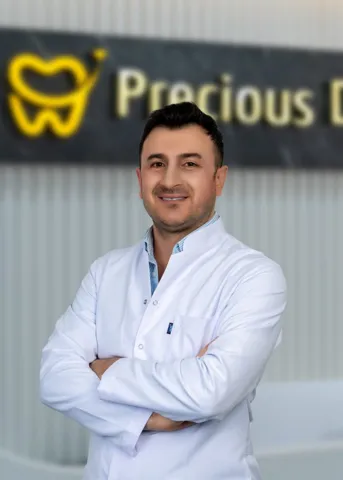 Medically reviewed by Dt. Hüseyin Yavuz Özbek, implant surgeon · Updated October 2026
Four things most people want to know first
A complete row of teeth, upper or lower, screwed onto six implants in the jawbone.
No. It stays in day and night. Only your dentist can unscrew it, for example for a deep clean.
Two stages. Temporary teeth first, then the final bridge after around four months of healing.
No. Bone, general health, smoking and some medicines all matter. Sometimes a denture is the better choice.
Five parts, working as one
"All-on-6" isn't a product or a brand. It describes a way of rebuilding a whole jaw of teeth on six supports.
- Six implantsTitanium screws placed in the jawbone, acting as artificial roots.
- AbutmentsSmall connectors that bring each implant up to the same level and angle.
- A frameOften a milled titanium bar that makes the bridge strong and rigid.
- The bridgeThe teeth and gum you see, usually zirconia or acrylic, screwed onto the frame.
- Temporary teethA lighter bridge you wear while the implants heal.
More supports, shared load, a little more margin
Six implants spread the biting force along more of the jaw than four. If one implant ever has a problem, five remain to hold the bridge. A 2024 review of 53 studies on upper-jaw bridges found no significant difference in survival between four and six implants, but less bone loss around the implants in the six-implant group.
Six needs enough bone along the jaw, especially further back. Where bone is thin, four angled implants or a graft may be suggested instead.
From scan to final teeth
Assessment
X-ray, 3D scan, medical history and medicines. A written plan: number of implants, brand, materials.
Surgery day
Remaining teeth removed if needed, six implants placed under local anaesthetic.
Temporary teeth
Often a fixed temporary bridge within a day or two, if the implants are firm enough.
Final bridge
After around four months of healing, the final teeth are made, tried in and fitted.
An honest answer, before anything else
Often a good fit
- Most of your teeth are missing, failing or can't be saved
- You want teeth that never come out
- There's enough bone along your jaw, or it can be built up
- You're in reasonable general health and can clean carefully every day
Worth thinking twice
- You smoke heavily, or drink heavily
- You have gum disease that isn't under control
- Diabetes that isn't well controlled
- You take bone-strengthening medicines, or have had head or neck radiotherapy
- A well-fitting denture already does the job for you
Fixed teeth still need looking after
Implant teeth can't decay, but the gum and bone around them can become infected if plaque builds up.
- Every day: brush, and clean under the bridge with interdental brushes or a water flosser.
- Regularly: check-ups and hygiene visits, with X-rays when your dentist advises.
- Over the years: the British Society of Periodontology says implants may last 10 to 20 years before retreatment. The teeth on top may need repair sooner.
Costs and travel have their own guides
What does All-on-6 cost?
UK and Turkey prices, what a quote should include, and a cost calculator.
allon6cost.co.uk →All-on-6 in Turkey
How the two trips work, choosing a clinic and aftercare back in the UK.
allon6turkey.co.uk →All-on-4 or All-on-6?
A side-by-side comparison of four and six implants.
allon4vsallon6.co.uk →
Written by a clinic, and we say so
This guide is published by Precious Dental, a licensed dental clinic in Antalya, Türkiye. We benefit if you choose us, so we keep the guide factual, link to UK sources such as the NHS and the Oral Health Foundation, and tell you when All-on-6 isn't the right step.
Medical content is reviewed by Dt. Hüseyin Yavuz Özbek, Dentist — Implant Surgery & Prosthetics, registered with the Turkish Dental Association (no. 49105).
All-on-6 FAQ
What is All-on-6?
A full arch of fixed teeth, upper or lower, held by six implants placed along the jawbone. The teeth are screwed onto the implants, so they don't come out like a denture. Only a dentist can remove them.
Is All-on-6 better than All-on-4?
Not automatically. A 2024 review of 53 studies found no significant difference in implant or bridge survival between four and six implants in the upper jaw, but less bone loss around implants in the six-implant group. Your bone decides which suits you.
How long does All-on-6 take?
Usually two stages a few months apart. Implants are placed and temporary teeth fitted first. After around four months of healing, the final bridge is made and fitted.
How long does All-on-6 last?
The British Society of Periodontology says implants may be expected to last 10 to 20 years before retreatment, with care and maintenance. The teeth on top may need repair or replacing sooner.
Is All-on-6 painful?
The surgery is done under local anaesthetic, so you shouldn't feel pain during it. Soreness and swelling for the first few days are normal and are managed with painkillers your dentist recommends.
Sources: four vs six implants review (2024) · British Society of Periodontology · Oral Health Foundation
Ask a dentist-led team, without the sales pitch.
Tell us what you're considering. A real person replies in plain English, and will tell you honestly if All-on-6 isn't the right step for you.