All-on-6 after losing your teeth to gum disease
Gum disease is the most common reason people need a full arch of new teeth. It is also the strongest predictor of trouble around implants later. The good news: knowing that lets you plan for it.
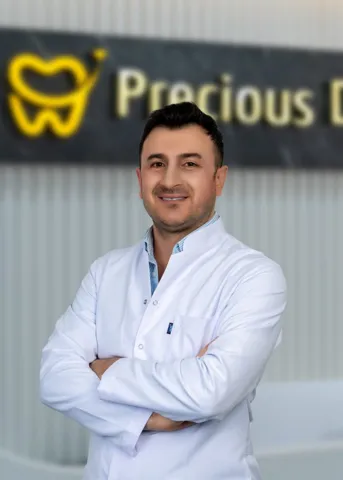 Medically reviewed by Dt. Hüseyin Yavuz Özbek, implant surgeon · Updated October 2026
Yes, people who lost teeth to gum disease (periodontitis) can have All-on-6, and many do. But a history of periodontitis is one of the main risk factors for peri-implantitis, inflammation that destroys bone around implants. The British Society of Periodontology says active gum disease must be controlled before implants, and that people prone to it need excellent daily cleaning and regular professional maintenance afterwards.
A familiar story
Many of the people we see for All-on-6 tell a similar story. Teeth that felt fine for years began to loosen. Gums bled when brushing. A dentist mentioned “pockets” and bone loss. One by one, teeth were taken out or simply drifted, until eating became a daily problem and a partial denture or a full denture followed. That process is periodontitis, the advanced form of gum disease.
The European Federation of Periodontology describes periodontitis as a chronic inflammatory disease triggered by bacteria that destroys the tissues holding teeth in place and can lead to tooth loss. It is very common and often painless until late, which is why so many people are surprised by how quickly they lost their teeth.
Why the risk follows you to implants
Removing the teeth removes the pockets and much of the infection, but it does not change the reasons you were vulnerable. Some people's immune systems react more strongly to the bacteria in plaque. Smoking, diabetes and stress add to that. Implants sit in the same mouth, with the same bacteria, and the gum and bone around them can become inflamed in a very similar way.
The inflammation around implants comes in two stages:
- Peri-implant mucositis: inflamed gum around the implant without bone loss. It is reversible with better cleaning and professional care.
- Peri-implantitis: inflammation that has started to destroy the bone supporting the implant. It is harder to treat and can, if it progresses, lead to losing the implant.
A 2025 systematic review by the Academy of Osseointegration and the American Academy of Periodontology, summarised by the British Society of Periodontology, found that a history of periodontitis was among the strongest indicators of both stages, alongside smoking and, for peri-implantitis, diabetes. The reviewers' conclusion was simple: a patient who moves from gum disease into implant care does not leave their risk profile behind, so maintenance must be structured and tailored.
How common is peri-implantitis?
Estimates vary a great deal because studies define it differently. A 2022 meta-analysis of 57 studies estimated it at about 20% of patients and about 12.5% of implants, while stressing how much the figure changes with the definition used. Whatever the exact number, it is common enough that everyone with implants should look after them as if it could happen to them, and people with a gum disease history even more so.
Before All-on-6: getting the mouth stable
The British Society of Periodontology states that there must be no ongoing dental disease before implants are placed, and that active gum disease needs to be controlled by treatment or by removing the affected teeth first. It adds that implants can be placed successfully in people susceptible to gum disease, provided the disease is stable and an excellent level of oral hygiene is maintained.
For All-on-6 that often means:
- An honest assessmentWhich teeth can be kept, which cannot, and whether the other jaw needs gum treatment.
- Treating infectionAcute infections are treated before surgery so the implants go into healthy bone.
- Practising the routineLearning how to clean properly before the surgery, not after. It is much easier to build a habit before you have a bridge to clean around.
- Tackling risk factorsStopping smoking and improving diabetes control if they apply. See smoking and vaping and diabetes.
Designing a bridge you can clean
One of the most important, and least discussed, parts of All-on-6 for someone with a gum disease history is the shape of the underside of the bridge. The British Society of Periodontology notes that the prosthesis should allow you to clean effectively around it, and that the dentist can help by making sure its shape allows adequate cleaning.
- A smooth, polished, slightly convex underside is easier to clean than a concave one that traps food.
- Access between the bridge and gum for an interdental brush or water flosser at each implant.
- A shape you can see and reach with your own hands and eyes, which matters more as dexterity changes with age. See when cleaning is harder.
Ask to be shown how to clean the specific bridge design you are offered, ideally on the temporary bridge, before the final one is made.
After All-on-6: a maintenance plan, not a hope
Think of maintenance as part of the treatment, not an optional extra. A sensible plan for someone with a periodontitis history includes:
| How often | What |
|---|---|
| Twice daily | Brush the bridge, especially where it meets the gum |
| Daily | Clean under the bridge and around each implant with interdental brushes, super floss or a water flosser |
| Every few months (as advised) | Hygienist or dentist maintenance visit, more frequent than average for most people with a gum disease history |
| Periodically | Bridge removed for a deep clean and implant check, and X-rays when advised |
The daily routine is set out step by step on cleaning and care. What happens at a professional visit, including when the bridge is unscrewed, is on hygienist visits with All-on-6.
Signs to act on
- Bleeding around an implant when you clean, on more than one occasion.
- Red, puffy or tender gum around an implant.
- A bad taste or smell that does not go with cleaning. See bad breath with All-on-6.
- Gum shrinking back so that metal shows.
- Any movement of the bridge.
Early inflammation can usually be turned around. Do not wait for your next routine visit if you notice these. The full picture is on peri-implantitis explained.
Is All-on-6 still a good idea?
For many people with a gum disease history, yes. Fixed teeth anchored in bone can transform eating and confidence after years of loose teeth or dentures. Going in with open eyes, a cleanable design and a firm maintenance plan is what turns a good result on day one into a good result in year ten. If daily cleaning under a fixed bridge would be difficult for you, a removable implant-retained denture may be the safer long-term choice; see All-on-6 and the alternatives.
What a thorough assessment looks at
If gum disease cost you your teeth, the assessment for All-on-6 should look further than “is there enough bone?”. Expect, or ask for:
- A check of the gums around any teeth you are keeping, including pocket measurements, so that disease is not left active in the other jaw.
- X-rays and a 3D scan to see where bone has been lost, which often decides where the six implants can go.
- A conversation about why the disease happened, including smoking, diabetes and how you cleaned your teeth, because the same factors affect implants.
- A clear plan for after treatment, including how often you will see a hygienist and who will do it if you live far from the clinic.
Your part in the first year
The first year sets the pattern. Make the cleaning routine a habit while the temporary bridge is in, attend every check-up, and ask the hygienist to watch you clean and correct your technique. People who build the routine early tend to keep it. If you find yourself skipping days, tell your dentist; there is usually a tool or a design change that makes it easier.
At Precious Dental we check gum health and bone on your scan before All-on-6. Ask us to show you how to clean your bridge before you go home. Why Precious Dental.
Common questions
If all my teeth are removed, does the gum disease go away?
The infected teeth and pockets go, but the reasons you were susceptible, such as how your immune system reacts to plaque, smoking or diabetes, remain. Implants can develop a similar disease, called peri-implantitis.
Do I need gum treatment before All-on-6 if my teeth are coming out anyway?
Often some treatment is still needed, especially if teeth in the other jaw are being kept or if there is active infection. Your dentist will advise; the aim is a healthy mouth on the day of surgery.
Will I need to see a hygienist more often?
Usually yes. People with a history of gum disease are generally advised to have more frequent maintenance visits than average. Your dentist will set an interval based on your risk.
Is All-on-6 or All-on-4 better if I had gum disease?
Neither is automatically better. What matters is enough healthy bone and a bridge designed so you can clean underneath it. Ask how you will clean the specific design you are offered.
What are the early warning signs around implants?
Bleeding when you clean, red or swollen gum around an implant, a bad taste, or gum shrinking back. Early inflammation (mucositis) is reversible if treated.
Sources
- British Society of Periodontology — Patient FAQs: dental implants (active gum disease must be controlled)
- British Society of Periodontology — Research Corner: risk factors for peri-implant diseases (AO/AAP systematic review)
- European Federation of Periodontology — What is periodontitis?
- NHS — Gum disease
- Diaz et al. (2022), BMC Oral Health — What is the prevalence of peri-implantitis? Systematic review and meta-analysis
Checked October 2026. Where we give our own view as a clinic, we say so.
Ask a dentist-led team, without the sales pitch.
Tell us what you're considering. A real person replies in plain English, and will tell you honestly if All-on-6 isn't the right step for you.