All-on-6 when cleaning is harder for you
A fixed bridge needs cleaning underneath every day. If your hands, eyesight or memory make that difficult, or might in future, it is worth planning for now.
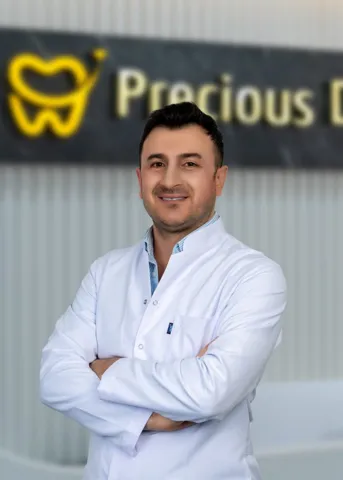 Medically reviewed by Dt. Hüseyin Yavuz Özbek, implant surgeon · Updated October 2026
Cleaning under an All-on-6 bridge takes some dexterity, so arthritis, Parkinson's disease, tremor, poor eyesight or memory problems need to be part of the plan. A bridge shaped for easy cleaning, a water flosser, thick-handled brushes and more frequent professional cleaning all help. A 2018 review reported high implant survival in people with Parkinson's disease, but found no evidence on dementia. If daily cleaning would be too hard, a removable implant-retained denture may be easier for you or a carer to look after.
Why this deserves its own conversation
Most of the attention in All-on-6 goes on surgery day. But the part that decides how long the treatment lasts happens at home, every day, for years: cleaning under the bridge and around each implant. The Oral Health Foundation says cleaning implants is similar to cleaning natural teeth, with brushing twice a day and careful daily cleaning around each implant with interdental brushes. For most people that is a manageable routine. For someone with stiff hands, a tremor or failing eyesight, it can be a real obstacle.
It is also worth thinking ahead. A bridge fitted at 68 may still be in place at 88. Planning for a time when cleaning is harder is sensible, not pessimistic.
What makes cleaning hard
- Arthritis in the hands and wrists, which makes small, precise movements painful.
- Parkinson's disease and tremor, which make it hard to guide a small brush into a gap.
- Poor eyesight, which makes it hard to see where plaque is.
- Memory problems, which can mean cleaning is forgotten or done once instead of twice.
- Stroke affecting one side, which makes reaching one side of the mouth harder.
- Reduced mouth opening, from some joint and connective tissue conditions.
What the research says
A 2018 systematic review of older patients and common medical conditions reported high implant survival in patients with Parkinson's disease. In other words, the implants themselves tend to do well. The same review found no evidence on implant survival in people with dementia, so there is little research to guide decisions there.
The bigger issue in these conditions is usually not whether implants integrate, but whether the gum and bone around them can be kept healthy over the years. That comes down to cleaning.
Start with a cleanable design
The British Society of Periodontology says the prosthesis should allow you to clean effectively around it, and that the dentist can help by making sure its shape allows adequate cleaning. When you know cleaning may be difficult, the design of the bridge becomes even more important:
- A smooth, polished underside that does not trap food, rather than a deep hollow.
- Clear access at each implant for a brush tip or water jet.
- A shape you can see in a mirror and feel with your tongue, so you know when it is clean.
- Trying it out first. Practise cleaning the temporary bridge and tell the dentist what is difficult before the final bridge is made.
Tools that make it easier
| Tool | Why it helps | Tip |
|---|---|---|
| Water flosser | Rinses under the bridge without needing to steer a small brush | Use a low setting at first and lean over the basin |
| Electric toothbrush | Does the scrubbing for you; thicker handle | Choose one with a timer and pressure warning |
| Long-handled interdental brushes | Easier to angle than short ones | Ask the hygienist which size fits each gap |
| Foam grips or adapted handles | Make thin handles easier to hold | An occupational therapist can advise |
| Magnifying mirror with light | Helps you see under the bridge | A suction mirror on the bathroom wall frees both hands |
Sitting down to clean, with elbows resting on a table or basin, steadies the hands for many people with tremor. Doing it at the same time each day, linked to another habit such as taking evening tablets, helps with memory.
More frequent professional cleaning
If home cleaning is less thorough, professional cleaning has to do more. Ask your dentist for a maintenance plan with shorter intervals between hygiene visits, and for the bridge to be removed for a deep clean when needed. What happens at those visits is described on hygienist visits with All-on-6. Watch for early signs of trouble, explained on peri-implantitis explained.
When a carer helps
Many people with All-on-6 eventually have help from a partner, family member or care worker. Cleaning someone else's fixed bridge is perfectly possible with a little training.
- Show them howAsk the dentist or hygienist to show your carer the routine, ideally at an appointment.
- Write it downA short card in the bathroom: brush, then water flosser, then interdental brushes, morning and night.
- Use a good positionThe person being helped seated, the carer standing slightly behind or to the side, with good light.
- Keep records togetherYour implant passport, X-rays and the name of your dentist where a carer or care home can find them.
Fixed or removable: an honest look
For some people, a fixed bridge is exactly right: nothing to take out, nothing to lose, nothing to forget in a glass by the bed. For others, especially those who already struggle to clean, a removable implant-retained denture may be the better long-term choice. It clips onto two to four implants and comes out for cleaning, so the denture can be scrubbed over a basin and the implants reached easily. A carer can usually manage it with less training.
Neither is better for everyone. Our page comparing All-on-6 and the alternatives sets out the differences, and the full daily routine for a fixed bridge is on cleaning and care.
Can a fixed bridge be changed later?
Sometimes. In some cases implants placed for a fixed bridge can later be used to hold a removable denture instead, if cleaning becomes too difficult. Whether that is possible depends on the implant positions and system. It is a reasonable question to ask before treatment, especially if you have a condition that is likely to progress.
Questions to ask before treatment
- How will I clean under this bridge, and can you show me on the temporary bridge?
- Which tools would you recommend for my hands?
- How often should I have professional cleaning?
- If cleaning becomes harder in future, could these implants hold a removable denture?
- Can you show my partner or carer how to help?
An occupational therapist can help
If arthritis or another condition makes everyday tasks hard, an occupational therapist can suggest adaptations for brushing and cleaning, from thicker handles to ways of positioning yourself. Your GP can often refer you, and some charities for arthritis and Parkinson's publish practical guides to daily living aids. It is worth asking before treatment, so the right tools are ready when you need them.
A routine for good and bad days
Many conditions have good days and bad days. It can help to have two routines: a thorough one for good days, with brushing, water flosser and interdental brushes, and a simpler one for bad days, perhaps the electric toothbrush and water flosser only. Doing something every day is better than an ambitious routine that gets skipped. Tell your hygienist which days are hard, so they can focus on the areas most likely to be missed.
Planning for memory problems
If you or a family member are worried about memory, it is reasonable to plan the cleaning routine around cues: the same time each day, a written card in the bathroom, and the tools left out in the same place. Some families set a phone reminder. If memory changes become more significant, a carer can take over more of the routine, and maintenance visits can be made more frequent.
At Precious Dental you, and anyone who helps you, can ask us to demonstrate how to clean your bridge before you go home, and we discuss removable options if we think they would be easier for you to look after. Why Precious Dental.
Common questions
Is a water flosser enough on its own?
For many people it does much of the work, especially under the bridge. Most dentists still recommend brushing the bridge twice a day and using interdental brushes where you can. Ask your hygienist which combination suits your bridge.
Can a carer clean my All-on-6 bridge?
Yes. A carer can brush the bridge and use a water flosser for you. It is easier if they are shown how by a dentist or hygienist, and if the bridge is designed with cleaning in mind.
What if I go into a care home?
Let the home know you have a fixed implant bridge, and give them the cleaning instructions and your implant passport. Regular dental visits should continue; some dentists visit care homes.
Is a removable implant denture easier to clean?
For many people with limited dexterity, yes. It comes out of the mouth, so it can be cleaned over a basin, and the implants or bar are easier to reach. It is still important to clean the implants themselves.
Does Parkinson's affect implants?
A 2018 systematic review reported high implant survival in patients with Parkinson's disease. The main practical challenges are cleaning and, sometimes, long appointments.
Sources
- Schimmel et al. (2018), Clin Oral Implants Res — Effect of advanced age and/or systemic medical conditions on dental implant survival (Parkinson's disease, dementia)
- British Society of Periodontology — Patient FAQs: dental implants (the prosthesis should allow effective cleaning)
- Oral Health Foundation — Dental implants (cleaning around implants)
- NHS — How to keep your teeth clean
- NHS — Rheumatoid arthritis
Checked October 2026. Where we give our own view as a clinic, we say so.
Ask a dentist-led team, without the sales pitch.
Tell us what you're considering. A real person replies in plain English, and will tell you honestly if All-on-6 isn't the right step for you.