All-on-6 compared with the alternatives
All-on-6 is one of several ways to replace a full arch of teeth. Here is how it stacks up against each of the others, and when another option may suit you better.
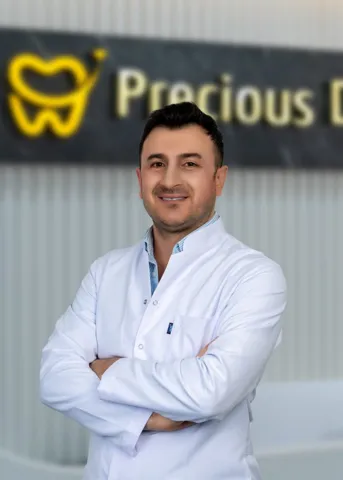 Medically reviewed by Dt. Hüseyin Yavuz Özbek, implant surgeon · Updated October 2026
All-on-6 gives you fixed teeth that only a dentist can remove, held by six implants. A full denture is cheaper and needs no surgery but moves and covers the palate. An implant-retained denture clips onto two to four implants and is removable for cleaning. All-on-4 uses fewer implants, often tilted, and suits jaws with less bone at the back. Zygomatic implants are for upper jaws with very little bone.
The options at a glance
| Option | Fixed or removable | Implants per jaw | Covers the palate? | Best suited to |
|---|---|---|---|---|
| All-on-6 | Fixed (dentist removes) | 6 | No | Most teeth lost or failing, enough bone along the arch |
| All-on-4 | Fixed (dentist removes) | 4, back two often tilted | No | Less bone at the back of the jaw |
| Implant-retained denture | Removable (you take it out) | 2–4 | Upper: often reduced, sometimes not | A more stable denture at lower cost, easier cleaning |
| Full denture | Removable | 0 | Upper: yes | No surgery wanted or possible; lowest cost |
| Single implants or implant bridges | Fixed | One per tooth, or 2 per short bridge | No | A few missing teeth, others healthy |
| Zygomatic implants | Fixed | Usually 2–4 long implants in the cheekbone, sometimes with standard ones | No | Upper jaw with very little bone |
All-on-6 or a full denture
A full denture sits on the gums and is held by suction and the shape of your mouth. It needs no surgery, can be made in a few weeks and is the least expensive way to replace a full arch. The NHS provides dentures as part of Band 3 treatment.
The trade-off is stability. Dentures can move when you eat or speak, an upper denture covers the roof of the mouth, and the jawbone under a denture gradually shrinks because nothing is stimulating it. All-on-6 is anchored in bone, leaves the palate open and does not come out. The full comparison is on All-on-6 vs dentures, and our sister site denturesorimplants.co.uk looks at the choice from a denture wearer's side.
All-on-6 or an implant-retained denture
An implant-retained (or implant-supported) denture is a halfway house. Two to four implants carry press-stud attachments or a bar, and the denture clips on. It is far more stable than an ordinary denture, needs fewer implants than All-on-6, and you take it out each night to clean it and the implants.
Some people prefer exactly that: being able to see and clean everything themselves is reassuring, especially if hand strength or eyesight is not what it was. Others find the idea of taking teeth out every night is the very thing they want to leave behind. A 2024 review of studies in patients aged 60 and over found that both implant overdentures and fixed full-arch bridges improved oral-health-related quality of life more than conventional dentures.
All-on-6 or single implants
When only one or two teeth are missing and the rest are healthy, single implants or a short implant bridge are usually the right answer. When most teeth are lost or failing, giving each tooth its own implant would mean ten or more implants per jaw, more bone, more surgery and more cost. A full-arch bridge on six implants replaces the whole row with far fewer.
The in-between case, where some teeth are healthy and some are not, needs a careful conversation. Removing sound teeth to fit a full arch is a big decision; ask your dentist to explain the alternatives in writing.
All-on-6 or All-on-4
Both give a fixed full arch. All-on-4 uses four implants with the back two tilted, which can avoid a bone graft when there is little bone towards the back. All-on-6 spreads the load over six supports and needs bone along more of the arch. Research has not shown one to outlast the other overall. We explain the idea behind six implants on why six implants, and our sister guide allon4vsallon6.co.uk compares the two side by side.
All-on-6 or zygomatic implants
When the upper jaw has lost so much bone that standard implants have nothing to hold, the options are bone grafting and a sinus lift followed by implants months later, or zygomatic implants that anchor in the cheekbone. A 2013 systematic review of 42 studies reported a cumulative zygomatic implant survival of 96.7% over 12 years, but also sinusitis, soft-tissue infection, numbness and openings between the mouth and sinus. It is specialist surgery. Read more on zygomatic implants.
How to choose
- Start with a 3D scan. Your bone decides much of the answer before preferences come in.
- Ask for two options in writing. A good dentist will explain at least one alternative and why they would or would not recommend it for you.
- Think about cleaning. Fixed teeth still need daily cleaning under the bridge. If that would be hard for you, a removable option may be kinder in the long run.
- Think ten years ahead. Every option needs maintenance; ask what upkeep and repairs typically involve.
At Precious Dental we plan from a CBCT 3D scan and tell you if we think a denture, an implant-retained denture or fewer implants would suit you better than All-on-6. Why we think we're the right clinic for All-on-6.
Common questions
What is the cheapest alternative to All-on-6?
A conventional full denture. It needs no surgery and is available on the NHS as part of Band 3 treatment in England, but it rests on the gums rather than being anchored in bone.
Is an implant-retained denture the same as All-on-6?
No. An implant-retained denture clips onto two to four implants and you take it out to clean it. All-on-6 is screwed onto six implants and stays in until a dentist removes it.
Can I have single implants instead of a full-arch bridge?
If you have lost most of your teeth, replacing each one with its own implant needs far more implants and bone. A full-arch bridge on six implants replaces the whole row with fewer implants. Single implants make sense when only a few teeth are missing.
Who decides between All-on-4 and All-on-6?
Your dentist, after a 3D scan. The main question is how much bone you have towards the back of the jaw. Our sister guide allon4vsallon6.co.uk compares the two in detail.
Sources
- NHS — Dental treatments (bridges, implants, dentures)
- NHS — How much NHS dental treatment costs (Band 3 includes dentures)
- British Society of Periodontology — Patient FAQs: dental implants (fixed and removable options)
- Linn et al. (2024), J Clin Med — Oral-health-related quality of life in elderly edentulous patients with full-arch rehabilitation: systematic review
- Chrcanovic & Abreu (2013), Oral Maxillofac Surg — Survival and complications of zygomatic implants: systematic review
Checked October 2026. Where we give our own view as a clinic, we say so.
Ask a dentist-led team, without the sales pitch.
Tell us what you're considering. A real person replies in plain English, and will tell you honestly if All-on-6 isn't the right step for you.