Bad breath and food under an All-on-6 bridge
Food getting under the bridge is one of the most common complaints in the first months of All-on-6. It is usually manageable, and bad breath usually has a simple cause. Here is how to deal with both.
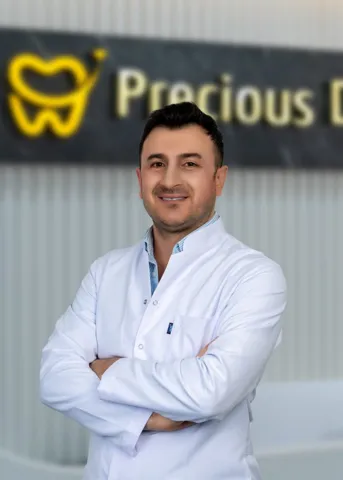 Medically reviewed by Dt. Hüseyin Yavuz Özbek, implant surgeon · Updated October 2026
A fixed bridge has a small space between its underside and the gum so it can be cleaned, and food and plaque can collect there. If not cleaned daily, bacteria break this down and cause bad breath. Rinsing after meals, cleaning under the bridge every day with a water flosser or interdental brushes, and cleaning your tongue usually solve it. Bad breath that persists despite good cleaning, especially with bleeding, swelling or a bad taste, can be a sign of inflammation around an implant and should be checked.
Why food gets under a fixed bridge
An All-on-6 bridge sits just above the gum rather than pressing into it. That small space is deliberate: it lets you clean underneath and around each implant, and it stops the bridge squeezing the gum. The British Society of Periodontology notes that the prosthesis should allow you to clean effectively around it. The downside is that food particles and plaque can collect in the same space.
Food trapping tends to be worse:
- with the temporary bridge, while the gum is still healing and shrinking,
- in the first months after the final bridge, until you learn which foods collect and how to clear them,
- at the back, where the bridge may extend beyond the last implant,
- with stringy or seedy foods, such as meat fibres, seeds, rice and leafy vegetables.
Where bad breath comes from
The NHS says bad breath is often caused by poor oral hygiene, and can also be linked to strong foods, smoking, dry mouth and gum disease. The Oral Health Foundation explains that bacteria breaking down food particles and plaque produce the unpleasant smell. With All-on-6, the usual sources are:
| Source | Clue | Fix |
|---|---|---|
| Food and plaque under the bridge | Worse in the evening; you can feel trapped food | Water flosser or interdental brushes daily |
| Coating on the tongue | White or yellow coating at the back of the tongue | Tongue scraper or brush |
| Dry mouth | Worse in the morning; mouth feels sticky | Water, sugar-free gum; see dry mouth |
| Smoking | Constant | See smoking and vaping |
| Inflammation around an implant | With bleeding, swelling, pus or bad taste | Dentist check |
| Not from the mouth | Sinus, stomach or other causes | GP if dental causes are ruled out |
A routine that works
- After mealsRinse vigorously with water once healing is complete; it moves most loose food.
- Morning and nightBrush the bridge with a soft brush, angled where the teeth meet the gum.
- Once a day, thoroughlyClean under the bridge and around each implant with a water flosser, interdental brushes or super floss. Evening is best, so less sits there overnight.
- TongueGently scrape or brush from back to front.
- Professional visitsKeep maintenance appointments; the bridge may be removed periodically for a deep clean.
The full step-by-step routine and tools are on cleaning and care. What happens at professional visits is on hygienist visits.
Tools that help most
- Water flosser: flushes food from under the bridge quickly. Aim the jet along the gumline under the bridge and around each implant.
- Interdental brushes: the right size for each gap, which your hygienist can measure.
- Super floss: floss with a stiff end and a spongy section that can be threaded under the bridge.
- Tongue scraper.
- Alcohol-free mouthwash: as an extra, not a replacement for cleaning.
Foods that trap more
You don't need to give these up, but knowing which ones collect helps you plan to clean afterwards:
- Stringy meat, such as roast beef or pulled pork.
- Small seeds: sesame, poppy, raspberries, tomato seeds.
- Rice, couscous and quinoa.
- Leafy greens and herbs.
- Sticky foods such as toffee or dried fruit.
Our eating guide covers what to eat at each stage of healing.
When the bridge shape is the problem
If food packs into the same spot every time, or the underside has a hollow that is impossible to clean, the bridge design may need attention. Gum shrinks a little in the months after surgery, which can open up spaces that were not there at fitting. A dentist can sometimes smooth or reshape the underside, or adjust the design if a new bridge is made. Tell your dentist exactly where food collects; a photo can help.
When bad breath is a warning sign
Bad breath that continues despite a thorough daily routine, particularly with any of the following, should be checked:
- bleeding around an implant when you clean,
- red, swollen or tender gum around an implant,
- pus or a persistent bad taste,
- gum shrinking back so metal shows,
- any looseness of the bridge.
These can be signs of inflammation around the implants. See peri-implantitis explained. A loose screw can also trap bacteria and cause a localised bad taste; see broken or loose bridge.
Compared with dentures
People coming from dentures sometimes notice that bad breath was less of an issue with a denture they could take out and soak. With All-on-6, the same job is done in place, with a water flosser and brushes. Most people find the routine quick once it is a habit.
The temporary bridge stage
Food trapping and bad breath are often most noticeable with the temporary bridge. In the first weeks you are told to clean gently around stitches and healing gums, you may not yet be able to use a water flosser at full strength, and the gum is changing shape as it heals. Follow your clinic's cleaning instructions for this stage, which usually begin with gentle rinsing and a soft brush and build up as the gum heals. A slightly stale taste in this period is common; a strong, foul taste, pus or worsening swelling is not and should be checked. Our article on temporary teeth covers this stage in more detail.
Morning breath
Almost everyone has some morning breath, because saliva flow drops during sleep and bacteria multiply. With a fixed bridge, any food left underneath overnight makes it worse. The single most effective change is moving your thorough clean under the bridge to last thing at night, so that the mouth goes into the night as clean as possible. If your mouth is very dry in the morning, see dry mouth and All-on-6; breathing through the mouth at night is a common cause.
How to check your own breath
It is notoriously hard to judge your own breath. A few simple checks help: run a clean interdental brush or floss under the bridge and smell it after a minute; look at your tongue in a mirror for a coating at the back; and ask someone you trust to tell you honestly. If the floss or brush from under the bridge smells strongly, the problem is almost certainly there, and a more thorough daily routine will usually solve it within a week or two.
When to see a GP instead
If your dentist finds the implants and bridge healthy and the bad breath continues despite good cleaning, the cause may not be in the mouth at all. The NHS lists other possible causes of bad breath, including some medicines, infections of the nose, throat or sinuses, and some stomach and other conditions. In that case, a GP is the right person to see. Mention the dental findings, so they know the mouth has already been checked.
Keeping it in perspective
Most people with All-on-6 do not have ongoing bad breath. When it happens, it is usually a sign that the cleaning routine needs a small adjustment, or that the bridge has a spot where food collects. Both are fixable. The habits that keep breath fresh are the same ones that protect your implants for the long term.
At Precious Dental tell us where food collects under your bridge; small changes to the shape can often make cleaning easier. Why Precious Dental.
Common questions
Is it normal for food to get under my bridge?
Some food trapping is common, especially in the first months and with the temporary bridge. A daily routine deals with it. A lot of trapping in one spot may mean the bridge shape needs adjusting.
Why does my breath smell even though I brush?
Brushing the bridge does not reach underneath it. Food and plaque under the bridge, on the tongue or around implants are the usual sources. Cleaning under the bridge and the tongue daily usually fixes it.
Can a water flosser fix food trapping?
It helps a great deal, because it flushes under the bridge. Many people use it after meals or at night, alongside brushing and interdental brushes.
Could bad breath mean my implants are infected?
Sometimes. If bad breath persists with good cleaning and comes with bleeding, swelling, pus or a bad taste, see your dentist to check for peri-implant inflammation.
Can the bridge be changed to trap less food?
Often, yes. The underside can sometimes be reshaped or smoothed. Tell your dentist where food collects.
Sources
- NHS — Bad breath
- Oral Health Foundation — Bad breath
- Oral Health Foundation — Dental implants (cleaning around implants)
- British Society of Periodontology — Patient FAQs: dental implants (signs of infection, cleanable prosthesis)
Checked October 2026. Where we give our own view as a clinic, we say so.
Ask a dentist-led team, without the sales pitch.
Tell us what you're considering. A real person replies in plain English, and will tell you honestly if All-on-6 isn't the right step for you.