The upper jaw, the sinus and All-on-6
Above the back teeth of the upper jaw sits an air space called the maxillary sinus. After teeth are lost, it often limits the bone available for implants. Here is how surgeons plan around it.
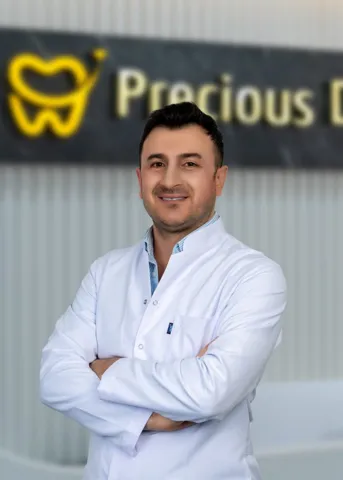 Medically reviewed by Dt. Hüseyin Yavuz Özbek, implant surgeon · Updated October 2026
The maxillary sinuses sit just above the back of the upper jaw. After teeth are lost, bone shrinks and the sinus can expand into the space, leaving little height for implants. Surgeons plan around this by placing implants further forward, tilting the back implants along the sinus wall, adding bone with a sinus lift, or, when bone is very limited, using zygomatic implants in the cheekbone. Each has trade-offs in surgery, time and risk.
The upper jaw is different
The upper and lower jaws behave differently when it comes to implants. The lower jaw is usually denser bone with a nerve running through it. The upper jaw is often softer bone, and above its back section sit the maxillary sinuses, two air-filled spaces in the cheekbones that connect to the nose. Several studies find implants do slightly less well in the upper jaw: for example, a 2022 review found the extra failure risk linked to diabetes was significant in the upper jaw but not the lower.
This is one reason the upper jaw often gets particular thought in All-on-6 planning, and one reason six implants are sometimes preferred to four there. A 2024 meta-analysis of upper-jaw bridges on four or six implants found similar implant and bridge survival, but less bone loss around implants with six. See why six implants.
What happens to the sinus after teeth are lost
When back teeth are lost, two things reduce the bone available for implants. The ridge of bone that held the teeth shrinks from below. And the floor of the sinus can drop down into the space the tooth roots used to occupy, a process sometimes called pneumatisation. After years of wearing an upper denture, there may be only a few millimetres of bone between the mouth and the sinus at the back.
A CBCT 3D scan shows exactly how much bone there is under each sinus, and that measurement shapes the plan.
The main options
| Option | How it works | Main trade-offs |
|---|---|---|
| Implants further forward | Use the bone in front of the sinuses | Less support for the back teeth on the bridge |
| Tilted back implants | Angle the back implants along the front wall of the sinus to reach further back without entering it | Needs multi-unit abutments; common in All-on-4 |
| Sinus lift (sinus floor augmentation) | Raise the sinus lining and add bone graft beneath it | Extra surgery; may need months of healing before implants carry teeth |
| Short implants | Use implants designed for limited bone height | Only where enough bone exists for them |
| Zygomatic implants | Long implants anchored in the cheekbone | Specialist surgery; sinus complications reported |
Often a plan combines more than one approach, for example implants at the front, tilted implants at the back on one side and a small sinus lift on the other.
Sinus lifts in more detail
The British Society of Periodontology explains that bone grafting is sometimes needed where there is too little of your own bone, and that the graft material can be your own bone, a bone substitute from animal sources, or synthetic material. A sinus lift is a particular kind of graft. There are two main approaches:
- Through the implant site (crestal or internal lift): for smaller amounts of extra height. The sinus floor is lifted gently through the hole prepared for the implant.
- Through a window in the side of the jaw (lateral lift): for larger amounts. A small window is made in the bone, the lining lifted and graft placed underneath.
Depending on how much bone there is, implants may be placed at the same time or after the graft has healed, which can take several months. That affects whether same-day teeth are possible and how long treatment takes. See same-day teeth and how All-on-6 works. If you are travelling for treatment, a graft can change the plan; our sister guide allon6turkey.co.uk covers that side.
Zygomatic implants
When the upper jaw has very little bone, zygomatic implants anchored in the cheekbone are another route. A 2013 systematic review reported high long-term survival but also sinusitis as the most frequently reported complication. They are covered on their own page: zygomatic implants.
Looking after your sinuses after surgery
Advice varies between surgeons, especially after a sinus lift. Common instructions include:
- Avoid blowing your nose forcefully for a period; dab instead.
- Sneeze with your mouth open to avoid pressure.
- Avoid straws and anything that creates suction in the mouth.
- Take any prescribed medicines, which may include decongestants or antibiotics.
- Ask about flying, diving and swimming before you book anything.
Signs to report
- Persistent blocked nose on one side, or discharge from the nose.
- Pain or pressure in the cheek that worsens after the first few days.
- A bad smell or taste.
- Air or fluid passing between the mouth and nose when you drink or blow.
- Small particles of graft material coming from the nose or mouth.
Most sinus symptoms after implant surgery settle, but these signs should be checked by your surgeon. Some sinus problems need treatment by an ear, nose and throat specialist.
Questions to ask your surgeon
- How much bone do I have under each sinus?
- Will I need a sinus lift, tilted implants or both?
- If a sinus lift is needed, will implants go in at the same time?
- How does this affect my timeline and same-day teeth?
- Do I have any sinus problems now that should be treated first?
The lower jaw has its own planning challenge, covered in the lower jaw nerve and All-on-6.
Existing sinus problems
If you already have sinus problems, such as long-standing congestion, frequent sinus infections or nasal polyps, mention them at your assessment. The CBCT scan often shows the sinuses clearly, and a thickened lining or fluid may be visible. Some surgeons prefer existing sinus disease to be assessed or treated by an ear, nose and throat specialist before a sinus lift or zygomatic implants, because a healthy sinus heals better. It does not always delay treatment, but it is a conversation to have early.
Allergies and seasonal congestion
Hay fever and allergic congestion are common and usually not a barrier. If you have had a sinus lift, though, frequent sneezing and nose-blowing in the healing weeks are best avoided. If you know you have seasonal allergies, consider timing upper-jaw surgery outside your worst season, and ask your GP or pharmacist about controlling symptoms in advance.
How grafts heal
After a sinus lift, the graft material is gradually replaced by your own bone over several months. The British Society of Periodontology notes that graft materials can come from your own bone, from animal sources or from synthetic materials, chosen partly by how much bone is needed and partly by your preference. If you have religious, ethical or dietary reasons to avoid animal-derived materials, tell your surgeon; synthetic options exist.
Upper jaw first, or lower?
When both jaws need treatment, people sometimes ask which should come first. Often both are treated together. When they are staged, the choice depends on which jaw is causing more problems, whether a sinus lift is needed and how long it would take to heal, and how the two bridges will be designed to meet. If the upper jaw needs a graft that must heal for several months, the lower jaw is sometimes treated first, or both are planned so that the final bridges can be made together. Ask your dentist to explain the order they suggest and why. Full-mouth planning is covered on full-mouth All-on-6.
At Precious Dental upper-jaw All-on-6 is planned from a CBCT scan that shows the sinuses. If a sinus lift is needed, it is written in your plan and price before treatment. Why Precious Dental.
Common questions
What is a sinus lift?
A procedure that gently raises the lining of the sinus and places bone graft material underneath, creating more height for implants. Implants may be placed at the same time or months later once the graft has healed.
Can I fly after a sinus lift?
Pressure changes can matter while the sinus heals. Ask your surgeon specifically; travel advice for treatment abroad is covered on our sister guide allon6turkey.co.uk.
Will I have sinus problems after upper implants?
Most people do not. Sinusitis is a known risk, particularly with sinus lifts and zygomatic implants. Report persistent congestion, discharge, facial pain or a bad smell.
Why not just put all six implants at the front?
Some plans do place more implants towards the front, but spreading support along the arch helps the bridge carry biting forces at the back. The plan balances bone, sinus and load.
Should I avoid blowing my nose after upper surgery?
Many surgeons advise avoiding forceful nose-blowing and sneezing with the mouth closed for a period, especially after a sinus lift. Follow your clinic's specific instructions.
Sources
- British Society of Periodontology — Patient FAQs: dental implants (bone grafting)
- Chrcanovic & Abreu (2013), Oral Maxillofac Surg — Survival and complications of zygomatic implants (sinusitis)
- Sharaf et al. (2024), Heliyon — Four versus six implants in the upper jaw: systematic review and meta-analysis
- Al Ansari et al. (2022), Materials — Diabetes and implants (failure differences significant in the upper jaw)
Checked October 2026. Where we give our own view as a clinic, we say so.
Ask a dentist-led team, without the sales pitch.
Tell us what you're considering. A real person replies in plain English, and will tell you honestly if All-on-6 isn't the right step for you.