Am I too old for All-on-6?
There is no upper age limit for dental implants. What matters is your health, your bone, how you will look after the bridge, and how much benefit you expect from it.
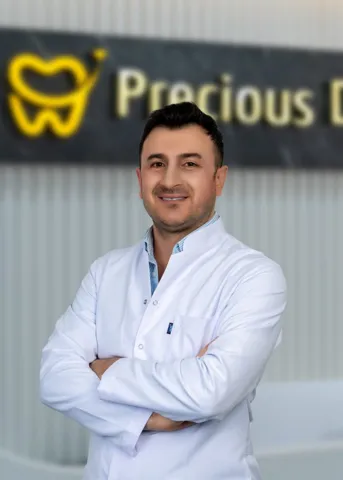 Medically reviewed by Dt. Hüseyin Yavuz Özbek, implant surgeon · Updated October 2026
Age alone does not rule out All-on-6. A 2018 systematic review of patients aged 75 and over found implant survival of about 97% at one year and 96% at five years. A 2019 review of ten-year survival found implants in people 65 and over did slightly less well than in younger people, but still mostly succeeded. General health, medicines, bone, the ability to clean daily and how long recovery takes matter more than the number of birthdays.
A question we hear every week
“Am I too old for this?” is one of the first things many people ask us, often a little apologetically. Some have worn dentures for decades and have finally decided they want to eat steak again. Others have watched their remaining teeth fail one by one and want a solution that will see them through the next twenty years. The honest answer is that age is a much smaller part of the decision than most people think.
What the research says about age
Two good-quality reviews help answer the question.
- Patients aged 75 and over. A 2018 systematic review led by gerodontology specialists in Bern and Geneva looked at implant survival in geriatric patients, defined as 75 or older, and in people with the most common medical conditions of later life. It found overall implant survival of about 97% at one year and about 96% at five years in the older age group.
- Ten-year survival by age. A 2019 review from UK dental schools pooled 18 studies of implant survival over ten years. The overall summary estimate was about 96%. In a sensitivity analysis, being 65 or older was a significant predictor, with survival of about 91.5%. So implants in older people did slightly less well, but most still lasted a decade.
The 2018 review also found no evidence at all about implant survival in people with dementia, which is a gap worth knowing about if you are planning for the very long term.
What matters more than age
| Factor | Why it matters | Read more |
|---|---|---|
| General health | Heart, lung and kidney conditions affect how safely a long appointment can be done | Heart and blood thinners |
| Medicines | Blood thinners, bone medicines and steroids change the plan | Bone medicines |
| Diabetes control | Affects healing and long-term gum health | Diabetes |
| Bone | Years of denture wear shrink the jaw; the scan shows what is left | Very little bone |
| Hands and eyesight | The bridge must be cleaned underneath every day | When cleaning is harder |
| Support at home | Someone to help in the first days and, later, with care if needed | See below |
The benefit side of the scales
Older people often gain the most from fixed teeth. Lower dentures in particular can be hard to keep in place once the jaw has shrunk, and the NHS notes that dentures can cause problems such as soreness and difficulty eating. A 2024 systematic review of patients aged 60 and over found that implant overdentures and fixed full-arch bridges both improved oral-health-related quality of life more than conventional dentures did.
Being able to chew properly can also make it easier to eat a varied diet, which matters for health in later life. That said, the evidence on quality of life applies to groups; it is worth thinking specifically about what you would gain. If your current denture is comfortable and you eat well with it, the case for surgery is weaker than if you avoid meals out because of it.
Thinking twenty years ahead
At 50, planning All-on-6 is mostly about the next decade or two. At 75, it is worth thinking about what happens if your health changes. The British Society of Periodontology describes implants as needing a significant commitment from the patient, with long-term maintenance and aftercare. If you later find cleaning difficult, or move into care, someone else may need to help.
- Choose a cleanable design. Ask how the underside of the bridge is shaped and practise cleaning it on the temporary bridge.
- Keep good records. Your implant brand and type, X-rays and the bridge design should be written down so any dentist can maintain them. Ask for an implant passport.
- Consider the alternatives honestly. An implant-retained denture on fewer implants can be removed and cleaned by a carer. See All-on-6 and the alternatives.
- Talk to your family. Make sure someone knows how your teeth are looked after.
Planning the treatment around you
Good care for older patients often looks like ordinary care, done more patiently. Some practical adjustments are worth asking about:
- Shorter appointments, or treating one jaw at a time rather than both in one long session. See full-mouth All-on-6.
- Morning appointments, when many people feel freshest and can take their usual medicines on time.
- A companion at the consultation and on surgery day to listen and help with instructions.
- Written instructions in large print, and a direct number to call with questions.
- Mobility needs: step-free access, help getting into the chair, and breaks during long appointments.
Recovery at an older age
Most people recover in a similar way whatever their age: soreness and swelling for a few days, then gradual improvement. Older people may bruise more, especially on blood thinners, and may feel tired for longer after a long appointment. Plan a quiet week, have soft foods ready, and ask someone to stay with you for the first night if you live alone. Our recovery guide explains the typical pattern.
The temporary teeth phase deserves particular care. Hard foods can damage the temporary bridge or disturb healing implants, and it is easy to forget in the middle of a meal. Cutting food small and following the eating guide helps.
Questions to ask your dentist
- Given my health and medicines, do you see any reason not to go ahead?
- Would you do both jaws at once, or separately?
- How will I clean this bridge, and what if that becomes hard for me later?
- What records will I take home so another dentist can look after it?
- What would you suggest if I decided against All-on-6?
The decision is yours
Some people decide in their late seventies that fixed teeth are exactly what they want, and enjoy them for years. Others decide that a better denture suits them better. Both are good decisions if they are well informed. A dentist who respects that will explain the options, not push one.
Getting a second opinion
For a large decision like All-on-6, especially later in life, a second opinion can be reassuring. A second dentist can look at the same X-rays and scan and tell you whether they agree with the plan, or whether they would suggest something different. It does not mean you distrust the first dentist. A good dentist will be comfortable with you seeking one and will provide copies of your records.
Family conversations
Many older people make this decision with family involved, whether for practical help, travel or advice. That can be valuable, but the decision is yours. It may help to agree beforehand what kind of support you would like: someone to come to the consultation, someone to stay with you after surgery, or simply someone to talk it over with. If family members have strong views, a shared appointment where the dentist can answer their questions directly often helps.
Practical comfort in the chair
Long appointments can be hard on backs, necks and joints. Ask for breaks, a neck cushion or a blanket if you feel the cold. If you have hearing difficulties, ask the team to face you when they speak and to write down important instructions. If you use a hearing aid, mention it before surgery, since it may need to come out during some parts of the treatment.
At Precious Dental we plan around your health and medicines, welcome companions, and will tell you if we think another option would serve you better. Why Precious Dental.
Common questions
Is there a maximum age for dental implants?
No. Dentists do not use an age cut-off. They look at health, medicines, bone and how the person will manage aftercare.
Will implants heal more slowly at my age?
Healing can be a little slower in older people and in some medical conditions, but implants still integrate with bone in the large majority of older patients in studies.
Is All-on-6 worth it at 80?
It can be, if you are in reasonable health and fixed teeth would make a real difference to eating and comfort. It is a personal decision; talk through the benefit, the recovery and the alternatives with your dentist and family.
What if I develop dementia later?
This is a fair question to consider. A fixed bridge needs daily cleaning and professional care. Some people plan with a carer in mind, or choose a removable option that is easier for someone else to clean. See our article on when cleaning is harder.
Can my family come to appointments?
Most clinics welcome a family member or friend, and it helps to have someone to remember the instructions and support you after surgery.
Sources
- Schimmel et al. (2018), Clin Oral Implants Res — Effect of advanced age and/or systemic medical conditions on dental implant survival
- Howe, Keys & Richards (2019), J Dent — Long-term (10-year) dental implant survival: systematic review and sensitivity meta-analysis
- Linn et al. (2024), J Clin Med — Oral-health-related quality of life in elderly edentulous patients with full-arch rehabilitation
- British Society of Periodontology — Patient FAQs: dental implants (commitment, maintenance)
- NHS — Dentures (false teeth)
Checked October 2026. Where we give our own view as a clinic, we say so.
Ask a dentist-led team, without the sales pitch.
Tell us what you're considering. A real person replies in plain English, and will tell you honestly if All-on-6 isn't the right step for you.