What do All-on-6 teeth actually feel like?
Fixed teeth on implants feel solid and secure, but not exactly like the teeth you were born with. Knowing what to expect makes the first weeks easier.
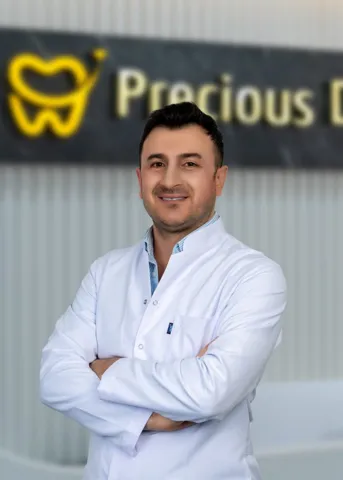 Medically reviewed by Dt. Hüseyin Yavuz Özbek, implant surgeon · Updated October 2026
All-on-6 teeth feel firm and fixed: they do not move or rub like a denture. But implants have no ligament around them, so biting feels harder and slightly less sensitive than with natural teeth, and some people bite harder than they realise at first. Hot and cold feel different, the bridge may sound or feel bulkier at first, and the tongue notices the new shape. Most people say it feels normal within weeks to a few months.
Solid: the first thing people notice
Ask people who have moved from a denture to All-on-6 what feels different and the first answer is usually the same: it doesn't move. There is no slipping when you eat, no lifting when you laugh, no adhesive and no sore spots from rubbing. The bridge is screwed onto implants that are fused with the jawbone, so it feels part of you. For many people that alone changes daily life.
People coming from failing natural teeth notice something similar: no more wobbly teeth, no more avoiding one side when chewing, no more worrying that a tooth will break.
Why it is not quite like natural teeth
A natural tooth sits in a socket, connected to the bone by a thin ligament full of nerve endings. That ligament acts as a tiny shock absorber and tells your brain very precisely how hard you are biting and where. Implants are different: the British Society of Periodontology explains that the jawbone heals closely against the implant surface, which is what holds it so firmly. There is no ligament.
So with All-on-6:
- Biting feels firmer and slightly more “direct”, without the faint give of natural teeth.
- Fine feedback is reduced. You can feel pressure through the jaw, but detecting something tiny, like a seed or a fish bone, can be harder at first.
- Some people bite harder than they mean to, especially early on, because the usual warning signals are muted. That is one reason soft food is so important while implants heal, and why grinding needs attention. See teeth grinding.
Over time the brain learns to use other signals from the jaw muscles, joints and gums. Most people find they chew naturally within weeks to a few months.
Temperature
The teeth on a bridge have no nerves, so they do not ache with ice cream or cold drinks the way sensitive natural teeth can. Many people coming from failing teeth find this a relief. You still feel temperature through your lips, tongue, gums and palate, so hot drinks can still scald. In the first days after surgery, avoid very hot drinks altogether; see drinks after surgery.
Sound and texture
Some people notice a slightly different sound when teeth touch, a light click rather than the dull contact of natural teeth. This is most noticeable with very hard materials such as zirconia and usually stops being noticeable after a few weeks. The surface texture is very smooth, which the tongue notices at first and then forgets.
The shape the tongue notices
The tongue is extremely sensitive to shape. A bridge has a base where it meets the gum and a slightly different contour behind the teeth from natural teeth. In the first days this can feel bulky. Saliva may seem to increase as the mouth reacts to something new, then settles. Speech also adapts over the same period; see speaking with All-on-6.
Temporary teeth versus final teeth
| Temporary bridge | Final bridge | |
|---|---|---|
| Material | Usually acrylic | Often zirconia on a titanium framework |
| Feel | Lighter, slightly softer contact | Very rigid; firmer contact |
| Thickness | Often bulkier for strength | Often slimmer and more refined |
| Food | Soft foods only while implants heal | Most foods, with sensible care |
| Adjustment | Used to test look, speech and bite | A shorter second adjustment period |
More on the first stage in All-on-6 temporary teeth and on materials in materials.
A typical timeline of getting used to it
- First week: swelling, soreness and the strangeness of something new. Feelings are dominated by healing, not by the teeth.
- Weeks two to four: the tongue and lips adapt; cheek biting and bulkiness fade; speech improves.
- Months two to four: eating soft foods becomes easy; the bridge starts to feel like “your teeth”.
- After the final bridge: a few weeks to get used to the new shape and firmer material, then gradually adding harder foods.
Compared with dentures
A 2024 systematic review of patients aged 60 and over found that both implant overdentures and fixed full-arch bridges improved oral-health-related quality of life more than conventional dentures. The NHS describes the adjustment period many people go through with new dentures, including soreness and difficulty eating. With All-on-6 there is also an adjustment period, but it tends to be about getting used to something new rather than coping with something that moves. The full comparison is in All-on-6 vs dentures.
Eating: what feels different
Once the final bridge is in and you have built up gradually, most people eat a wide range of foods. A few things are worth knowing:
- Cut food smaller at first, and chew on both sides to balance the load.
- Be careful with very hard items, such as ice, hard sweets or bones, as with any teeth.
- Food can get under the bridge, which you will feel. Rinsing after meals and cleaning daily deal with it. See bad breath and food trapping.
- Taste often seems better for people coming from an upper denture, because the palate is uncovered.
Our eating guide takes you stage by stage.
When something feels wrong
- The bridge feels loose, clicks or moves when you press it.
- One spot hits first when you bite, or your jaw aches after eating.
- Pain around an implant after the healing period.
- Persistent cheek or tongue biting after the first month.
These are worth checking promptly. Most have simple fixes: tightening a screw or adjusting the bite. See bite adjustment and broken or loose bridge.
Feelings people often describe
Patients describe their new teeth in different ways, but a few comments come up again and again. Many say the bridge feels “solid” or “like it is part of my head”. Some say it feels big at first, then they forget about it. People coming from dentures often talk about the relief of not thinking about their teeth while eating or laughing. People coming from failing teeth often say it is the first time in years they have chewed on both sides. A few people take longer to adapt, especially if their bite height has changed a lot or they are very sensitive to shape. All of these are normal.
Cleaning sensations
Cleaning under the bridge brings its own sensations. The first time you use a water flosser or interdental brush under the bridge, you may feel the gum is tender or bleeds slightly, especially while it is still healing. That usually settles as the gum toughens. Healthy gum around implants should not bleed regularly once healing is complete; persistent bleeding is a sign to tell your dentist. See cleaning and care.
The palate and taste
If you wore an upper denture that covered the roof of your mouth, uncovering it often changes the experience of eating. Many people say food tastes and feels better, and that they can sense its temperature and texture across the palate again. A fixed All-on-6 bridge sits around the arch and does not cover the palate.
When adaptation takes longer
A small number of people find it harder to get used to fixed teeth. Common reasons include a large change in bite height, a bridge that is bulkier than they expected, or anxiety about damaging it. Talking to your dentist helps: sometimes the bridge shape can be refined, sometimes it is a matter of time and reassurance. If you feel the bridge is affecting your daily life after a couple of months, ask for a review rather than putting up with it.
At Precious Dental please tell us about anything that feels wrong after your temporary or final bridge is fitted; small bite and comfort issues are usually quick to adjust. Why Precious Dental.
Common questions
Can I feel with implant teeth?
You can feel pressure and texture through the jaw and surrounding tissues, but not in the same way as natural teeth, which have nerves and a cushioning ligament. Most people adapt and chew naturally.
Do implant teeth feel sensitive to hot and cold?
The teeth themselves don't have nerves, so they don't ache with cold like natural teeth. You may still feel temperature through the gums and the rest of the mouth.
Why does my bridge feel bulky?
Your tongue is very sensitive to changes in shape and notices any new contour. The sense of bulk usually fades over a few weeks. If it doesn't, ask your dentist to check the shape.
Is it normal to bite my cheek?
It is common in the first weeks while the muscles adapt to new tooth positions. If it continues, the bridge may need a small adjustment.
Will the final teeth feel different from the temporary teeth?
Usually, yes. The final bridge is often slimmer and more rigid, and may be made of a different material. There is usually a short second period of adjustment.
Sources
- British Society of Periodontology — Patient FAQs: dental implants (osseointegration, prostheses)
- Oral Health Foundation — Dental implants
- Linn et al. (2024), J Clin Med — Oral-health-related quality of life with full-arch rehabilitation in older patients
- NHS — Dentures (false teeth)
Checked October 2026. Where we give our own view as a clinic, we say so.
Ask a dentist-led team, without the sales pitch.
Tell us what you're considering. A real person replies in plain English, and will tell you honestly if All-on-6 isn't the right step for you.