How All-on-6 can change your face
Losing teeth changes the face, and replacing them can change it back, at least partly. Here is what new teeth can realistically do for your appearance, and how to make sure the result looks like you.
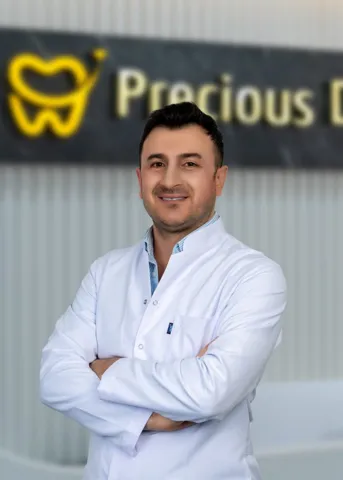 Medically reviewed by Dt. Hüseyin Yavuz Özbek, implant surgeon · Updated October 2026
Teeth and the bone around them support the lips and cheeks. After teeth are lost, the jaw shrinks and the face can look shorter and the lips thinner. All-on-6 can restore some of that support by placing teeth, and sometimes pink gum-coloured material, where they used to be, and by restoring face height when you bite. It cannot replace lost skin elasticity or act like cosmetic surgery. Bringing old photos and testing the look with the temporary bridge give the best result.
Teeth hold the face up
We tend to think of teeth as tools for eating, but they also shape the lower face. The front teeth support the lips from behind. The back teeth and the bone around them help fill out the cheeks. When the upper and lower teeth meet, they hold the jaws a certain distance apart, which sets the height of the lower face.
When teeth are lost, three things happen over time. The bone that held the teeth slowly shrinks, because it is no longer being used. The lips and cheeks lose their support and can fall inwards. And when you close your mouth, the jaws come closer together, so the distance from nose to chin shortens. Dentures can replace some of this support, but the shrinking bone underneath means a denture that fitted well ten years ago may no longer support the face in the same way.
What All-on-6 can change
- Lip support. Teeth placed in the right position push the lips gently forward, softening lines around the mouth.
- Face height. Restoring the right distance between the jaws when you bite can lengthen a collapsed lower face.
- Smile. The shape, size, colour and arrangement of the front teeth are designed, not inherited.
- Gum appearance. Where bone and gum have been lost, pink gum-coloured material on the bridge can restore the look of a natural gumline.
- Confidence. Not a physical change, but many people say they smile and laugh more without worrying about loose or missing teeth.
What it cannot change
It is important to be realistic. All-on-6 replaces teeth and some lost support. It is not a facelift.
- It does not tighten skin or remove wrinkles away from the mouth.
- It cannot fully rebuild very large amounts of lost bone in the face; it can only add support from inside the mouth.
- Adding too much support or height to try to fix everything usually looks and feels wrong.
- It does not change your nose, eyes or the shape of your face above the mouth.
Upper and lower: different roles
The upper bridge does most of the work for appearance, because the upper front teeth show when you speak and smile and support the upper lip. The lower bridge matters more for face height and for how the lower lip sits. If you are having one jaw treated, the dentist designs around the teeth or denture in the other jaw. If both are treated, the whole face can be planned together. See full-mouth All-on-6.
Pink gum on the bridge
Because the bone shrinks after teeth are lost, simply putting teeth back where the gum is now would often give very long teeth. Instead, many All-on-6 bridges have a section of pink, gum-coloured material that recreates the lost gum and bone. It is a normal part of full-arch bridges.
What matters is where it shows. Your dentist will look at your smile line: how much of your upper teeth and gum show when you smile broadly. If the join between the pink material and your own gum would show when you smile, the plan may need to change, for example by adjusting the bone level at surgery so that the join sits higher, out of sight. This is planned before surgery, which is why photos of your smile are taken at the assessment.
Getting it to look like you
The best results look natural, not “perfect”. Some practical steps:
- Bring old photosPictures from when your teeth were healthy, ideally smiling and from the side. They show tooth length, shape and how your lips sat.
- Say what you liked and didn't likeMany people have a feature they always wanted to change, such as a gap or a crooked tooth, and others they want to keep.
- Think about shadeVery white teeth can look artificial in an older face. A natural shade often looks more convincing. Your dentist can show you shade guides.
- Test it on the temporary bridgeLive with the look for a few weeks. Show family and friends. Note anything that seems too long, short, forward or bright.
- Approve the try-inBefore the final bridge is finished, you should see and approve a try-in version.
The first weeks: swelling and change
Right after surgery, swelling makes the face look fuller than it will be. Over the following weeks, as swelling goes down and the muscles relax into the new tooth positions, the appearance settles. Don't make final judgements in the first week. Many people also find their lips feel tight or prominent at first; this usually eases as the muscles adapt.
Speech changes during the same period, and the two are linked: tooth position affects both. See speaking with All-on-6.
Protecting the result over time
Implants help preserve the bone they are placed in, but the face continues to age. Keeping implants healthy, through daily cleaning and regular check-ups, protects the bone that supports the bridge. If you grind your teeth, a night guard protects the shape of the teeth. And if the teeth on the bridge eventually wear or chip, replacing them restores the look. More in how long All-on-6 lasts.
Questions to ask your dentist
- Will the join between the bridge and my gum show when I smile?
- How much will my face height and lip support change?
- Can I see a mock-up or try-in before the final bridge is made?
- Which shade would look natural for me, and why?
- What can be adjusted after the final bridge is fitted?
Profile and side view
Much of the change in appearance after All-on-6 is easiest to see from the side. When teeth and bone have been lost, the lower face can look shorter, the chin can seem to come forward and up, and the lips can fold inwards. Restoring tooth position and bite height can bring the lips forward and lengthen the lower face. Side-view photos taken before treatment, and again with the temporary bridge, are a good way to judge the change. Ask your dentist to take them, or take your own in the same light and position.
The lower lip and chin
The lower front teeth and the bite height affect how the lower lip sits and how the chin looks. A bite that is too closed can make the chin look prominent and the lower lip roll outwards; a bite that is too open can make it hard to close the lips comfortably. The aim is lips that meet gently at rest without strain. This is one of the things the dentist checks with the temporary bridge.
When expectations and reality differ
Most people are pleased with how they look after All-on-6, but some are surprised. A common one is that new teeth look “too perfect” compared with old photos. Small, natural variations in shape and colour can be built into the final bridge if you want a less uniform look. Another is that the face looks fuller than expected for the first weeks, which is usually swelling. If, after the swelling has gone, you are unhappy with the look of the temporary bridge, say so clearly: the final bridge can be changed, and this is the stage to do it.
Photos for your records
Keep photos of your smile from the front and side, before treatment, with the temporary bridge and with the final bridge. They are useful if you need a new bridge years later, because they show what worked.
At Precious Dental we take photos and measurements at the assessment, use the temporary bridge to test the look, and ask you to approve the try-in before the final bridge is finished. Why Precious Dental.
Common questions
Will All-on-6 make me look younger?
It can make the lower face look fuller and better supported, which many people feel makes them look more like they used to. It does not change skin, wrinkles elsewhere or the shape of the face above the mouth.
Why does my face look sunken without teeth?
Without teeth, the jawbone gradually shrinks and the lips and cheeks lose their support. When you close your mouth, the jaws come closer together, shortening the lower face.
Can I choose how my new teeth look?
Yes, within what works for your bite, lips and speech. Shape, size and shade are discussed and tested on the temporary bridge before the final teeth are made.
Will people see pink gum material?
Often a pink section replaces lost gum and bone. With a well-planned bridge it sits behind the lip when you smile normally. Your dentist will check your smile line during planning.
Can the bridge be too big?
Yes. Teeth that are too long, too far forward or too white can look unnatural. That is why photos, measurements and the temporary bridge matter.
Sources
- NHS — Dentures (false teeth)
- British Society of Periodontology — Patient FAQs: dental implants (bone, prostheses)
- Oral Health Foundation — Dental implants
Checked October 2026. Where we give our own view as a clinic, we say so.
Ask a dentist-led team, without the sales pitch.
Tell us what you're considering. A real person replies in plain English, and will tell you honestly if All-on-6 isn't the right step for you.